
He also said the Forward Contracts (Regulation) Act would be amended to strengthen the regulatory framework of the commodity derivatives market.

Investor wealth eroded by Rs 4.46 lakh crore in a single day on Friday with the benchmark BSE Sensex tanking more than 1 per cent in line with global stocks rout. The 30-share BSE Sensex plunged 885.60 points or 1.08 per cent to close at 80,981.95 with 25 of its components declining and five ending with gains. During the day, it nosedived 998.64 points or 1.21 per cent to hit an intra-day low of 80,868.91.
Trading in commodity futures -- basically an arena of stock market players -- may have started with economic objectives such as price discovery and price risk management, but, of late, has become an important part of investment portfolio promising quick and attractive returns. In fact, stock marketing and futures trading are the main instruments of speculation in the capitalist economy in which the capital is invested and reinvested with a sole purpose of making a profit.

RBI feels allowing foreign companies into this business may affect financial stability.

Finance Minister Arun Jaitley said Sebi would develop new products in the commodity derivatives space apart from taking steps to deepen the corporate bond market.

After a gap of more than 13 years, the National Commodity and Derivatives Exchange (NCDEX) is all set to launch a futures contract in groundnut (in shell) to fill a void in oilseeds complex futures because of a ban in several high-volume commodities.
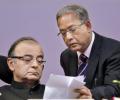
Sebi will be taking a number of measures to develop a derivatives market of commodities.
The government may impose a stamp duty of Rs 300 per crore (0.003 per cent) on transactions in commodities, stocks and other derivatives, with the Finance Ministry moving a proposal to Cabinet for taking the final call, sources said.
A single market regulator clearly has its own advantages over multiple regulators. But it is more suitable for well-developed and mature markets which are smaller in size, like the UK.

This market has already overtaken the equity derivative market in terms of volume. With these instruments, it can set further growth, as the move will pave way for institutional investors' entry.
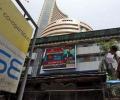
The stock exchange BSE has called off the merger of its unit at the Gujarat International Finance Tec-City International Financial Services Centre (GIFT IFSC), India International Exchange (India INX), with NSE International Exchange (NSE IX), a similar unit floated by rival National Stock Exchange (NSE), according to sources familiar with the development. BSE and NSE had been in discussions for the merger for over a year, but it has yielded no results, they said.

It will be the first to go, in what has become an overcrowded segment since India first allowed futures trading in commodities in 2003.

DEA officials to push for this at a meeting with FM Jaitley.

India's leading commodity exchange, National Commodity and Derivatives Exchange (NCDEX), and private weather forecasting company Skymet took a significant step towards launching the country's first tradeable weather index on Monday (August 14) by entering into an agreement to deepen their understanding of the impact that weather has on agricultural commodities. The memorandum of understanding (MoU) between NCDEX and Skymet is a profound step in the direction of linking farmers with the weather in a scientific way, according to an official statement. Sources indicate that NCDEX and Skymet will conduct workshops and seminars across the country to educate farmers about how they can scientifically use weather forecasts to hedge risks.

Multi-asset allocation funds emerged as the most popular option for MFs as they provided the needed flexibility.

From the Sensex basket, Tech Mahindra, Tata Steel, JSW Steel, HCL Technologies, Tata Consultancy Services, Larsen & Toubro and Kotak Mahindra Bank were the biggest laggards. Mahindra & Mahindra, Power Grid, Bajaj Finance, IndusInd Bank and Maruti were the major gainers.

BSE is world's largest exchange in terms of listed companies and figures among top 10 globally on various other parameters.

Corporate margins and profits in India remain vulnerable to changes in crude oil prices in the international market. Historical quarterly data from listed companies (excluding banks, finance and insurance, oil and gas, and power sectors) indicate an adverse correlation between corporate margins and crude oil prices.

'There are occasions when the prices of individual items like food raise inflation; then supply-side measures must be taken.' 'But if there is continued inflation, it means liquidity is aggravating the situation.'

Union Finance Minister Nirmala Sitharaman, along with her team of bureaucrats, delved into the fine print of the 2024-25 Budget documents in a press conference, detailing the government's road map on bringing down the debt-to-GDP ratio and bold tax measures.

Commodity futures market's dream run came to a halt in 2013 as a Rs 5,600 crore scam in Jignesh Shah-led spot exchange NSEL and imposition of transaction tax on non-farm items hampered the growth of business, with turnover estimated to dip by 30 per cent to Rs 125 lakh crore.

The Sebi Act deals with securities and the definition of securities, according to the Securities Contracts Act, doesn't include commodities.
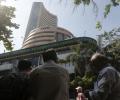
The proposal to merge the Gujarat International Finance Tec-City (GIFT City) units of the National Stock Exchange (NSE) and BSE has reached an advanced stage, and both bourses could file an application before the National Company Law Tribunal as early as this month, according to a top regulatory official. Sources indicate that the merger proposal has received approval from their respective boards. Both the NSE and BSE are arch rivals when it comes to onshore trading.

Higher inflation has again become a matter of concern for fast-moving consumer goods (FMCG) companies. After prices of commodities like sugar and wheat moved higher and stabilised at those levels, the crude oil too surged, adding to FMCG firms' worries. Besides, a dry spell in August in the ongoing monsoon season impacted rural demand.

The government on Friday proposed hiking the securities transaction tax on Futures & Options (F&O) contracts, a move that will increase the trading costs in the derivatives segment as well as help in curbing excessive trades. In the Finance Bill 2023, passed by the Lok Sabha on Friday, the Securities Transaction Tax (STT) on options is proposed to be increased to 0.0625 per cent from 0.05 per cent and on futures contracts to 0.0125 from 0.01 per cent. Analysts opined that higher STT will shore up the government's revenues to some extent and also discourage excessive trading since a large number of retail traders are losing money in the segment.

Trading in agri commodities on Saturdays to be reviewed later; more changes likely in the coming months to align with global pattern.

In a first for India, bullion derivatives contracts will be settled on a blockchain platform. This will help in global acceptance of gold refined by Indian bullion refineries, giving a fillip to the local industry, exports, as well as investments. From November 1, the National Stock Exchange (NSE) will accept gold delivery only on the blockchain platform.

Rajesh Bhayani examines what SEBI's approval of diamond futures trading means for the diamond market players.

A combination of fewer listings and falling 'average daily traded value' contributed to the drag in Q3.

FMC approves commodity bourse's contract-launch calendar for two years.

Tyre stocks have been on a tear over the past six months, with average returns exceeding 45 per cent. Except for Apollo Tyres, which has seen a slight correction in the last month and a half, limiting its gains to 16 per cent, listed peers such as MRF, CEAT Tyres (formerly Cavi Elettrici e Affini Torino), and JK Tyre & Industries have delivered returns exceeding 30 per cent during this period. Production-related constraints and sluggish demand in Europe, where sales are expected to remain flat, coupled with high valuations, have contributed to Apollo Tyres' underperformance. The tyre sector's gains can be attributed to robust growth trends driven by the replacement market, which constitutes more than two-thirds of sales.

While the four largest listed paint companies have seen marginal negative returns, the S&P BSE Fast Moving Consumer Goods (FMCG) and the National Stock Exchange Nifty FMCG indices have delivered a solid 16 per cent return during the same period. Initially, volume growth and reduced costs bolstered the sector's sentiment, but brokerages have grown cautious due to increased competitive pressures.

Regulated electronic platforms such as e-spot markets or spot exchanges may be deemed as authorised markets.

Benchmark equity indices Sensex and Nifty closed higher on Friday after two days of fall, helped by buying in metal, telecom and auto stocks amid a firm trend in global markets. Automakers led by Maruti Suzuki India, Hyundai, Mahindra & Mahindra reporting robust wholesales of passenger vehicles and GST collections crossing Rs 1.50 lakh crore for the third straight month in May also added to the optimism. The 30-share BSE Sensex climbed 118.57 points or 0.19 per cent to settle at 62,547.11.

'If because of El Nino, the monsoon is affected adversely in the current year, naturally it will affect income projections and consequently Budget numbers.'

Dabba trades also allow investors to avoid SEBI registration requirements or the margin requirements set by exchanges.
